
The year 2026 marks a major turning point in the perception of health risks associated with zoonoses in Europe. The sudden media coverage of an infection outbreak aboard the cruise ship MV Hondius has triggered a wave of legitimate concern among European populations. At the heart of these concerns, one question keeps coming up: how can we effectively protect ourselves against a virus that seems to be re-emerging from the past? It must be said that Covid-19 and the resulting lockdowns have left indelible marks on many of us. This article provides a comprehensive analysis of the nature of hantaviruses and demonstrates why the use of certified FFP2 filters is the most appropriate response to this new threat.
Understanding Hantaviruses: Biology and Origins
To understand the effectiveness of protection, it is imperative to understand the enemy. Hantaviruses are not new biological entities. They belong to the family Hantaviridae, within the order Bunyavirales. These viruses get their name from the Hantaan River in South Korea, where they were formally identified in the 1950s during an epidemic affecting thousands of soldiers.
Viral Structure and Morphology
Structurally, hantaviruses are enveloped viruses whose genome consists of three segments of negative-sense single-stranded RNA. This lipid envelope is crucial for prevention: it makes the virus vulnerable to disinfectants such as sodium hypochlorite or alcohol. In terms of size, viral particles are extremely small, with a diameter of between 80 and 120 nanometers (nm).
| Characteristic | Technical Details | Implications for Protection |
| Diameter | 80 to 120 nm | Requires fine filtration but travels on larger carriers |
| Structure | Lipid envelope, trisegmented RNA | Sensitivity to UV rays and chemical disinfectants |
| Outdoor Survival | Several days in cool/humid environments | Persistent risk in poorly ventilated areas |
| Resistance | Inactivated at 60°C or by bleach | Importance of textile washing and disinfection |
Although the size of the virus itself is smaller than the porosity of many filters, its airborne mode of transport radically changes the game. The virus does not circulate as a "cloud" of isolated particles, but attaches itself to micro-dust or biological fluid droplets, which facilitates its interception by high-quality filters.
Diversity of strains and global distribution
There are over 38 known species of hantavirus, each intrinsically linked to a specific animal reservoir, usually a wild rodent. Traditionally, two groups are distinguished: "Old World" hantaviruses (Europe and Asia) and "New World" hantaviruses (the Americas).
-
Puumala Virus: This is the predominant strain in France and Northern Europe. Its natural host is the bank vole. It causes a moderate form of hemorrhagic fever with renal syndrome.
-
Andes Virus: Originating from South America, it is particularly monitored in 2026 as it is the only one capable of human-to-human transmission.
-
Hantaan Virus: Responsible for severe forms in Asia, transmitted by the striped field mouse.
-
Seoul Virus: It is transmitted by brown and black rats present in urban areas worldwide.
Ecology and reservoirs: the critical role of rodents
Hantavirus is a zoonosis, meaning that humans are only an accidental host in a natural cycle dominated by rodents. Infected rodents show no symptoms of illness; they are asymptomatic carriers who chronically excrete the virus in their saliva, urine, and feces.
The bank vole: a formidable forest host
In France, the main risk comes from the bank vole (Myodes glareolus). This small forest rodent thrives in deciduous forest areas, especially where beech and oak trees provide abundant food. The population dynamics of these rodents follow specific cycles. Years of high forest seed production (a "mast" phenomenon) lead to a demographic explosion of voles, mechanically increasing the risk of human transmission the following year.
Risk areas in mainland France
The northeastern quarter of France is historically an area of active circulation for the Puumala virus. Health authorities report between 100 and 150 cases per year, with peaks during epidemic years.
| Region / Area | Particularly Affected Departments | Risk Characteristics |
| Grand Est | Ardennes, Marne, Meuse | High density of forests and bank voles |
| Bourgogne-Franche-Comté | Doubs, Jura, Haute-Saône | Rural areas with significant forestry activities |
| Hauts-de-France | Aisne, Nord | Ecological continuity with Belgian outbreaks |
| French Guiana | Coastal and forested area | Maripa strain causing severe pulmonary syndromes |
In these regions, any activity involving handling wood or cleaning rural buildings must be considered a potential exposure situation.
Transmission Mechanisms: Inhalation as the Main Route
One of the most frequent questions from internet users concerns how one "catches" hantavirus. Contrary to popular belief, direct contact with rodents is rare. Contamination is most often indirect and environmental.
Dust aerosolization process
The predominant mode of contamination is the inhalation of aerosolized viral particles. When rodent droppings dry in an enclosed environment protected from the sun, the virus remains viable for several days. Any mechanical action such as sweeping, shaking carpets, or moving dusty boxes, releases these microscopic residues into the air. Once inhaled, the particles enter the respiratory tract and reach the pulmonary alveoli, the starting point of the infection.
Activities and risk profiles
Analysis of cases shows that infection often occurs during ordinary activities carried out under favorable conditions :
-
Spring cleaning: Reopening a second home, cellar, or attic that has been closed all winter.
-
DIY and gardening: Handling wood piles, sweeping a garden shed, maintaining a shed.
-
Forestry activities: Logging, skidding, or simply sleeping in an unventilated forest cabin.
-
Military activities: Maneuvers in forested areas with ground bivouac.
Human-to-human transmissibility: myths and realities in 2026
The fear of a "new Covid" has been fueled by cases on the MV Hondius involving the Andes strain. It is crucial to reassure the public: for French strains (Puumala), human-to-human transmission has never been observed. Regarding the Andes strain, although human-to-human transmission is possible via respiratory routes or close contact (saliva, sexual intercourse), it requires extreme proximity and remains marginal compared to rodent-borne transmission. Wearing an FFP2 mask remains the safest barrier to break any potential transmission chain, whether environmental or human.
Clinical Manifestations and Diagnosis
The average incubation period for hantavirus is two to three weeks, but it can be up to two months. This latency explains why many patients do not immediately link it to a past cleaning activity.
Initial symptoms: the "flu-like syndrome"
The disease begins abruptly with non-specific signs that can be confused with seasonal flu or COVID-19 :
-
High fever (often above 38.5°C).
-
Severe headaches.
-
Back and muscle pain (myalgia).
-
Digestive disorders (abdominal pain, nausea, vomiting).
European vs. American forms
In France, the progression typically leads to Hemorrhagic Fever with Renal Syndrome (HFRS). Patients may experience a drop in blood pressure, followed by kidney damage characterized by a decrease in urinary volume (oliguria). Although painful and sometimes requiring hospitalization, this form resolves in the vast majority of cases with a mortality rate of less than 1%.
Conversely, American strains (Andes, Sin Nombre) cause Hantavirus Cardiopulmonary Syndrome (HCPS). The lungs are affected by a sudden accumulation of fluid (pulmonary edema), leading to acute respiratory distress. This is a medical emergency with a mortality rate that can reach 40 to 60%.
Technical analysis: why is the FFP2 filter effective?
The core of the protection lies in the mask's filtration capacity. Many internet users wonder if an FFP2 filter can truly stop a virus as small as a hantavirus. The answer lies in aerosol physics and European certification standards.
Understanding the EN149 Standard
Respiratory protective masks are classified into three categories based on their filtration efficiency for fine particles (dusts, fumes, aerosols).
| Mask Class | Minimum Filtration (0.4 to 0.6µm particles) | Recommended Use |
| FFP1 | 80% | Coarse dust, light DIY |
| FFP2 | 94% | Biological risks, viruses, urban pollution |
| FFP3 | 99% | Highly toxic particles, asbestos, invasive medical procedures |
FFP2 certification tests are carried out with sodium chloride and paraffin oil particles measuring on average 0.4 to 0.6 micron (µm). A human hair measures approximately 40 to 100µm in diameter. The filtration offered by an FFP2 mask is therefore about 100 times finer than a hair.
Mechanisms of viral particle capture by an FFP2 filter
Filtration is not a simple "sieving". The FFP2 filter uses four physical principles to capture pathogens :
-
Inertial Impaction: Heavier particles (virus-carrying dusts) directly hit the filter fibers because they cannot follow changes in air direction.
-
Interception: Medium particles are captured when they pass closer to the fiber than their own radius.
-
Diffusion (Brownian motion): Very small particles (<0.1µm, like the bare virus) have an erratic trajectory due to collisions with air molecules. This agitation increases their probability of hitting a fiber and sticking to it.
-
Electrostatic attraction: FFP2 filter fibers receive an electrostatic treatment that attracts particles like a magnet, regardless of their size.
Therefore, an FFP2 filter is extremely effective in stopping not only dust contaminated by rodents, but also the viral particles themselves should they become detached from their carrier.
Frogmask: The excellence of French respiratory protection
While the filter is essential, the support that holds it is just as important. A high-performance filter in a poorly fitted mask is useless, as contaminated air will pass through the sides. This is where Frogmask radically distinguishes itself from disposable masks as well as from one-size-fits-all mask brands.
Design focused on sealing and comfort
With seven years of experience in respiratory protection, the Frogmask brand was developed to address the shortcomings of traditional masks.
-
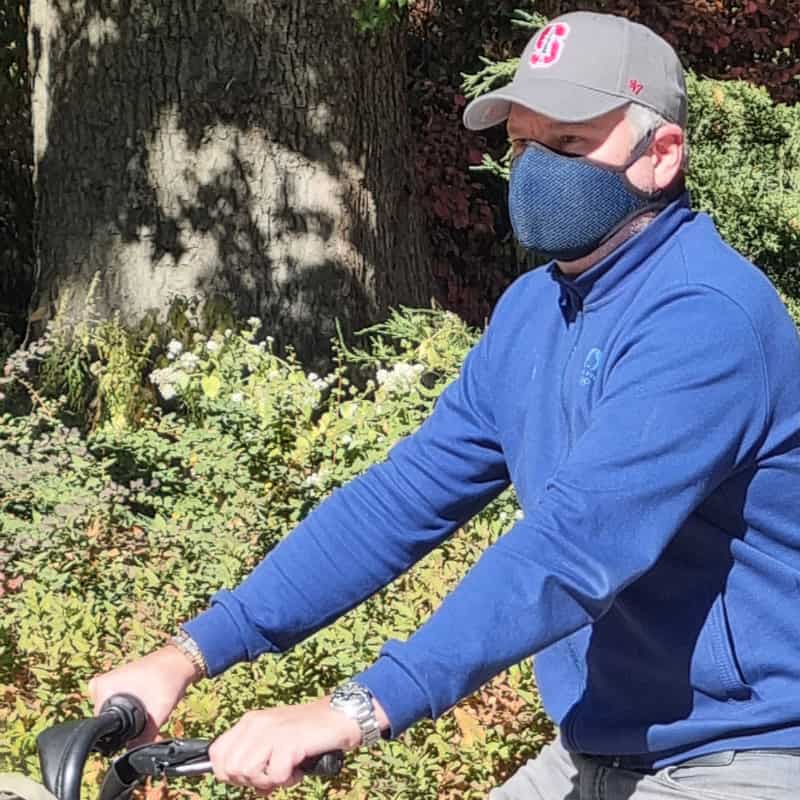
Three sizes (M, L, XL): Perfect sealing is impossible with a single size. Frogmask offers dimensions adapted to the morphology of each face, ensuring that inhaled air actually passes through the filter and not through the sides.
-
3D Mesh: The outer structure of the Frogmask uses a 3D Mesh of 410g/m². This material is ultra-breathable, lightweight (28g) and water-repellent, preventing external moisture from saturating the filter.
-
Double nose bar: Both the mask and the filter have a flexible aluminum strip. This system seals tightly around the nose, eliminating fogging on glasses and preventing hot air from escaping upwards.
Anatomy of the Frogmask FFP2 filter
The filter equipping Frogmask masks is a technical component made of five graphene-free protective layers :
-
Outer layer: Non-woven polypropylene for large particles.
-
Middle layer: Filters fine dust.
-
Nanofiber core: Ensures filtration of particles down to 0.4µm at over 94%.
-
Non-woven cotton: Provides softness and additional filtration.
-
Inner layer: Skin comfort and protection against exhalation moisture.
| Component | Material | Certification / Standard |
| Mask support | 3D Mesh (Italy) | Oeko-Tex (Harmful substance free) |
| FFP2 filter | 5-layer Nanofiber | EN 149:2001 + A1:2009 FFP2 NR |
| Fasteners | Velcro + Ear elastics | High abrasion resistance (70K cycles) |
| Manufacture | Handmade | Made in France |
Unlike valved masks, which have become obsolete, the Frogmask filters both inhaled and exhaled air, thus protecting both the user and those around them, while offering very low breathing resistance thanks to new breathable fabrics.
Practical Guide: Hantavirus Prevention Protocol
Wearing an FFP2 mask is the cornerstone of protection, but it must be part of an overall safety strategy during risky activities.
Step 1: Ventilation of the area
Never enter a closed room (cellar, barn, shed) without first ventilating it.
-
Open all doors and windows for at least 30 to 60 minutes before starting work.
-
Stay away during this time to allow suspended particles to settle or be evacuated.
Step 2: Personal equipment
Once ventilation is complete, put on your protective gear:
-
Adjust your mask with an FFP2 filter. Check the seal by inhaling deeply: the mask should adhere to your face.
-
Wear waterproof rubber or nitrile gloves. Avoid leather or fabric which can absorb contaminated fluids.
-
Use protective clothing (long sleeves) and safety glasses.
Step 3: Wet cleaning (total prohibition of sweeping)
This is the most common and dangerous mistake. Never sweep dry.
-
Spray all surfaces and rodent droppings with a 10% bleach and water mixture (1 volume of bleach to 9 volumes of water).
-
Wait 10 to 15 minutes for the disinfectant to inactivate the virus.
-
Collect residues with paper towels or a damp mop.
-
If you see a dead rodent, spray it generously with disinfectant before handling it with gloves and placing it in a garbage bag.
Step 4: Post-intervention and hygiene
-
Discard gloves and used filter if dust exposure has been massive.
-
Wash the 3D Mesh support of your Frogmask by hand or machine (max 40°C).
-
Wash your work clothes at 60°C separately from other laundry.
-
Take a full shower and wash your hands thoroughly.
Market comparison: why choose Frogmask?
The respiratory protection market is vast, ranging from disposable construction masks to luxury masks. Frogmask occupies a unique position in terms of value for money and comfort.
| Brand / Type | Filtration Level | Strengths | Weaknesses |
| Frogmask | FFP2 | Multi-size sealing, ultra-breathable, Made in France | Requires filter change |
| Disposable Mask | FFP2 / FFP3 | Very accessible, disposable | Significant air leaks, discomfort, ecological impact |
| R-PUR | FFP3 | Very high filtration (0.05µm) |
Very high price, one size not suitable for slender faces |
| Respro | NC | Various designs |
One size, neoprene mask causing condensation. |
| Airinum | FFP2 | Premium look, adjustable |
Expensive and one size |
Customer reviews regularly highlight the brand's responsiveness and the quality of its personalized follow-up, rare elements in 2026. The product's durability, with one-year guaranteed support, makes it a worthwhile investment for anyone living in rural areas or moving around the city.
Frequently Asked Questions and Concerns from Internet Users
To conclude this analysis, let's answer direct questions from consumers who are looking for reassurance.
Does the FFP2 filter really protect against all viruses?
FFP2 filters are designed to block fine particles and aerosols. They are recommended by global authorities for protection against respiratory viruses such as influenza, COVID-19 and hantaviruses. Their effectiveness is proven as long as the mask is properly fitted to the face.
Can Frogmask be used for other risks?
Yes, this is one of the advantages of the FFP2 filter's versatility. It is extremely effective against:
-
Pollens and spring allergens.
-
Urban air pollution (PM2.5, PM10).
-
Construction dust (sanding, wood).
-
Sport shooting (powder residue).
- People suffering from multiple chemical sensitivity (MCS)
How much does protection cost over a year?
The initial purchase of a Frogmask mask is €40. The pack of 10 filters costs €28. By changing the filter every two weeks (i.e., about 25 filters per year), the daily cost is less than €0.30, which is much cheaper than the daily use of disposable masks of equivalent quality, while offering superior comfort.
Summary and final recommendations
Hantavirus, although rare, represents a serious health risk that should not be neglected, particularly in endemic areas of northeastern France and in the context of heightened vigilance in 2026. Transmission through inhalation of contaminated dust makes respiratory protection an essential bulwark for any cleaning or DIY activity in rural areas.
Frogmask masks provide a technical solution without compromise: certified FFP2 filtration capable of stopping pathogens, coupled with a 3D Mesh structure ensuring optimal sealing and breathability. Unlike disposable solutions, Frogmask offers durable, comfortable, and eco-responsible protection, made in France.
By adopting the wet cleaning protocols described in this report and equipping oneself with a perfectly fitted mask, every citizen can regain control of their health safety. Whether clearing a cellar, handling firewood, or simply moving around in a polluted urban environment, Frogmask stands out as the choice for expertise and peace of mind. Don't let dust decide your health: equip yourself with the best French filtration technology.