
Every summer, wildfires make headlines. But it's not just the flames that threaten our safety: toxic smoke, carried by the winds, can travel for thousands of kilometers and pollute the air of cities far from the blazes.
So, how can you protect yourself from wildfire smoke? What mistakes should you avoid, and how can you maintain healthy air at home or on the go? This practical guide answers all your questions to help you protect your lungs without panicking.
How to protect yourself from wildfire smoke?
To effectively protect yourself from wildfire smoke, you need to combine containment measures with appropriate respiratory protection:
-
Stay indoors and seal doors and windows.
-
Close off outdoor air intakes (VMC, air conditioning) or switch them to "recirculation" mode.
-
Use an air purifier equipped with a HEPA filter at home.
-
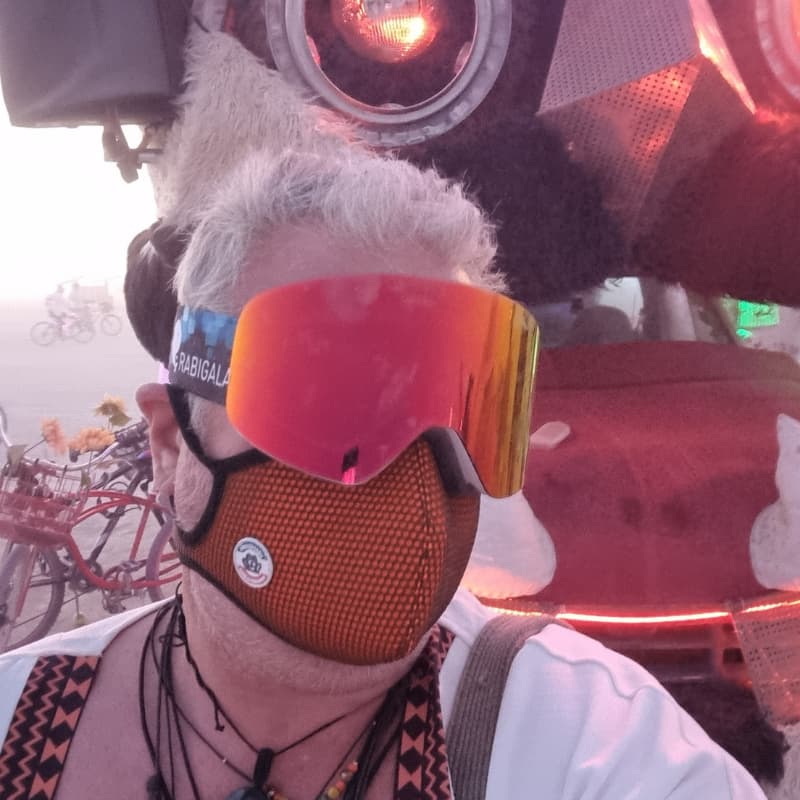
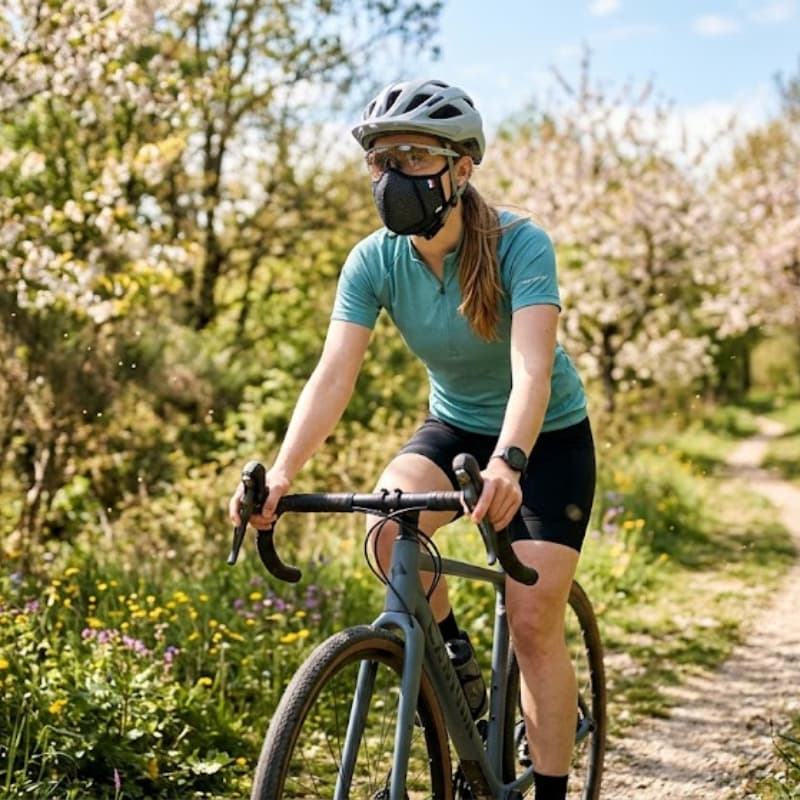
Wear an FFP2 protective mask (like a Frogmask anti-pollution mask) whenever you need to go outside.
-
Avoid any intense physical activity that increases your breathing rate.
Why is wildfire smoke so dangerous?
Unlike the smoke from a simple barbecue, wildfire smoke is a highly toxic cocktail. It contains harmful gases (carbon monoxide, benzene) but, most importantly, an immense quantity of fine particles (PM2.5).
These microscopic dust particles are so small (2.5 micrometers or less) that they pass through the natural filters in our nose and throat. They go directly into the alveoli of our lungs and enter the bloodstream. In the short term, this causes sore throats, coughs, headaches, and eye irritation. In the long term, it exacerbates heart and respiratory diseases, especially in children, seniors, and people with asthma.
What mask protects against wildfire smoke?
This is the most common mistake: thinking that a simple piece of fabric or a disposable surgical mask is sufficient. This is completely false.
-
Surgical mask (blue): It is designed to stop droplet projections outwards, not to filter the air you breathe in. It lets almost all fine smoke particles pass through the sides.
-
Wet scarf or handkerchief: A "DIY" technique that only blocks large ashes, but is useless against toxic smoke and invisible particles.
The only real solution: The FFP2 (or N95) mask. To block PM2.5, you need a certified filtering mask that guarantees a perfect seal with the face. This is where the Frogmask range of masks makes all the difference. Unlike disposable paper construction masks that fit poorly and create air leaks on the sides, Frogmask offers an ultra-comfortable 3D mesh structure and a double attachment system (head and neck). Equipped with interchangeable FFP2 filters, it perfectly fits the contours of your face so that 100% of the air you breathe is actually filtered.

Firefighters' dilemma: Why is their equipment evolving?
If the FFP2 mask is essential, why do we sometimes see forest firefighters working without a mask, with just a bandana?
For a long time, the safety doctrines for firefighters (especially in the United States, as revealed by an investigation by NBC News) did not require the wearing of N95/FFP2 masks for vegetation fires. Why? Because of the extreme physical exertion. Running on steep terrain in suffocating heat with a rigid mask makes breathing difficult and increases the risk of heatstroke (thermal stress).
However, in the face of the increasing toxicity of modern fires, policies are changing. Authorities are realizing that firefighters' lungs must be protected at all costs. For the general public, the lesson is clear: if you have to go out in smoky conditions, you need effective protection that is also comfortable and breathable. This is the whole point of a reusable FFP2 mask made of technical openwork fabric, which limits breathing resistance while blocking particles.
How to purify your home's air in case of a wildfire?
When smoke settles outside, your home should become your clean air bunker. Here's what to do:
-
Close everything: Doors, windows, skylights. If you notice drafts under a door leading outside, place a damp cloth there.
-
Manage ventilation: If you have air conditioning, don't necessarily turn it off, but switch it to "recirculation" mode. This prevents it from drawing in polluted air from outside. If you have a classic VMC (controlled mechanical ventilation), it's ideal to temporarily switch it off if the smoke is very dense.
-
Get out the purifier: A good indoor air purifier with a HEPA filter will continuously recycle the room's air to capture soot particles that have managed to infiltrate.
-
No added pollution: During this period, avoid lighting candles, incense, vacuuming (which releases micro-dust), or grilling in the kitchen.
How to protect yourself from smoke in the car?
If you have to drive through an area affected by wildfire smoke, your car's interior can quickly fill with toxic gases.
The immediate good reflex: activate the air recirculation button on your air conditioning (the symbol represents a curved arrow inside a car). This closes the exterior vents and forces the system to filter and cool only the air already inside. Also remember to drive with your headlights on, as smoke quickly reduces visibility, and always keep an FFP2 mask in your glove compartment in case you need to get out of the vehicle urgently.
What are the symptoms of smoke inhalation?
It's important to listen to your body. The first signs of excessive exposure to wood smoke are:
-
A dry or irritating cough,
-
Stinging or redness in the eyes,
-
A burning taste in the mouth and irritated throat,
-
Headaches or dizziness.
Important note: If you or someone you know experiences difficulty breathing, wheezing, or chest pain, immediately get to a cool place and contact emergency services (911 or 112).
In short: Anticipate to avoid suffocating
Wildfires and their plumes of smoke are unpredictable, but their health effects are very real. To get through the summer peacefully, anticipation is key. By equipping your home and keeping effective, washable, and durable respiratory protection within reach, you protect your health and that of your loved ones.
Want to breathe purer air when you're out and about? Discover the complete collection of our eco-responsible Frogmask masks and choose yours before the hot weather sets in.